


How to read market trends: charts, breadth and economic signals
How to read market trends: primary vs secondary trends, moving averages, volume and breadth, leading and lagging indicators, sector rotation, and their limits.
Market Trends · Analysis
How interest rates affect the stock market: the Fed's policy rate, discount rates and valuations, why bond prices fall as yields rise, and effects on sectors.

Key takeaways
Interest rates affect the stock market through three main channels: they change how much companies and consumers pay to borrow, they change how much investors are willing to pay today for profits that arrive in the future, and they change how attractive bonds and cash look compared with stocks. When rates rise, all three channels usually push stock prices down, and when rates fall, they usually push them up. The reality is messier, because markets react to expectations and because rates often move for reasons that also affect profits.
This is general education, not personal financial advice.
Most economies have a central bank that sets a short-term policy rate, the benchmark it uses to steer borrowing costs. In the US, that is the Federal Reserve. Its Federal Open Market Committee (FOMC) meets eight times a year on a regular schedule and sets a target range for the federal funds rate, the rate at which banks lend reserve balances to each other overnight. The Fed’s Economy at a Glance page tracks changes in that target over time.
The Fed’s goals, set by Congress, are maximum employment and stable prices, often called the dual mandate. As the Fed’s own explainer on monetary policy describes, when inflation runs too high, the Fed can raise its policy rate to cool spending and borrowing; when the economy is weak, it can lower the rate to encourage them. The Fed has said it considers inflation of 2% over the longer run, measured by the price index for personal consumption expenditures, to be consistent with its mandate.
From there, changes ripple out. Banks adjust the rates on credit cards, business loans and savings accounts. Bond markets reprice. Longer-term rates such as 10-year Treasury yields move too, though they also reflect expectations about future inflation and growth, so they don’t always follow the policy rate step for step.
A key detail for investors: monetary policy works with long and variable lags. A rate change today may take many months to show up fully in spending, hiring and inflation.
Once the policy rate changes and the rest of the rate structure adjusts, the effect reaches share prices through three separate routes. They usually push in the same direction, but their strength varies from company to company.
Higher rates make debt more expensive. For companies, that means higher interest bills on floating-rate loans and on any new bonds they issue, which reduces profits. It also raises the bar for new investment: a factory expansion that made sense when borrowing cost 4% may not when it costs 7%.
For households, higher rates mean pricier mortgages, car loans and credit card balances, leaving less to spend elsewhere. Since consumer spending drives a large share of US economic activity, slower spending eventually feeds back into corporate revenue.
The reverse applies when rates fall, which is why rate cuts are often seen as supportive for stocks, at least when they aren’t a response to a sharp economic downturn.
This is the channel that explains why stock prices can move sharply on rate news even before profits change.
A stock’s value, in theory, is the present value of all the cash it will generate in the future. To compare future cash with money today, investors apply a discount rate, the return they require for waiting and taking risk. That discount rate is built on top of a risk-free rate, usually a government bond yield. When interest rates rise, the discount rate rises, and the present value of future cash falls.
Here’s a simplified, hypothetical example. Say a company is expected to pay $100 a year forever. At a discount rate of 8%, that stream is worth $100 ÷ 0.08 = $1,250 today. If rates rise and investors now require 10%, the same stream is worth $100 ÷ 0.10 = $1,000, a 20% drop in value with no change at all in the business.
Two consequences follow:
When savings accounts and government bonds pay very little, investors looking for income are pushed toward stocks. When safe assets pay more, some money flows back. Analysts sometimes compare a stock market’s earnings yield, earnings divided by price (the inverse of the P/E ratio), with bond yields to judge whether stocks look expensive relative to bonds.
As Investor.gov explains, bond prices and interest rates move in opposite directions. An existing bond’s coupon is fixed, so when new bonds offer higher yields, the old bond’s price has to fall until its yield is competitive.
How much it falls depends on duration, a measure of a bond’s sensitivity to rate changes that rises with maturity. As a rough rule, a bond with a duration of 8 years would lose about 8% of its value if rates rose by one percentage point, and gain about 8% if they fell by one point. A two-year bond would move far less. That’s why long-term bond funds can fall sharply in periods of rising rates, even though bonds are generally considered safer than stocks.
Rate changes don’t hit all stocks equally. The table below shows common tendencies, not rules:
| Sector | Typical sensitivity to rising rates | Why |
|---|---|---|
| Banks | Mixed, can benefit | Wider gap between lending and deposit rates can lift margins, but loan demand and credit quality may weaken |
| Utilities | Often negative | Treated as “bond proxies” for their steady dividends; also carry heavy debt |
| Real estate (REITs) | Often negative | Rely on borrowing and compete with bonds for income-seeking investors |
| Homebuilders and housing | Negative | Higher mortgage rates reduce affordability and demand |
| Technology and high-growth | Often negative | Profits weighted to the future are hit hardest by higher discount rates |
| Consumer discretionary | Negative | Households have less to spend after higher debt payments |
| Insurers | Can benefit | Earn more on the large bond portfolios they hold |
To track which sectors are leading as conditions change, see our guide on how to read market trends.
Currency. All else equal, higher interest rates in a country tend to attract foreign capital looking for better returns, which can strengthen its currency. A stronger dollar makes imports cheaper for Americans but reduces the dollar value of overseas sales for US multinationals, which can weigh on their reported earnings.
Mortgages. In the US, the popular 30-year fixed mortgage rate tends to track longer-term Treasury yields rather than the federal funds rate directly. Adjustable-rate mortgages and home equity lines are more closely tied to short-term rates. Either way, higher rates raise monthly payments for new borrowers. Say someone borrows $300,000 over 30 years: at 4% the monthly principal and interest payment is about $1,432, while at 7% it is about $1,996. That difference cools housing demand, which affects builders, furniture retailers and lenders.
Markets are forward-looking. By the time the FOMC announces a decision, investors have often priced it in, based on economic data, Fed communications and futures markets. That’s why a rate rise can sometimes coincide with rising stocks, if it was smaller than feared, and why a speech hinting at future policy can move markets as much as an actual change. Big moves usually follow surprises. For a sense of how these shifts can feed into broader cycles, see our explainer on bull and bear markets.
Understanding how interest rates affect the stock market comes down to a few ideas: rates change borrowing costs, they change the value of future profits through the discount rate, and they change the appeal of bonds and cash. Bond prices move inversely to rates, rate-sensitive sectors react most, and expectations often matter more than decisions. None of this makes markets predictable, but it helps explain why they react the way they do. For more analysis, visit our Market Trends hub.
No. Rate increases often come when the economy is strong, and rising corporate profits can outweigh the drag from higher rates. Markets also tend to price in expected changes in advance, so a widely anticipated increase may have little effect on the day it happens. What usually moves prices is a surprise: rates rising faster, or staying higher for longer, than investors expected.
It is the interest rate at which banks and other depository institutions lend reserve balances to each other overnight. The Federal Reserve's Federal Open Market Committee sets a target range for it and uses tools such as the interest it pays on reserve balances to keep the rate within that range. Changes in the target influence other short-term rates throughout the economy.
An existing bond pays a fixed coupon. If new bonds start paying higher interest, the old bond's lower payments are less attractive, so its price must fall until its yield matches what buyers can get elsewhere. The reverse happens when rates fall. Bonds with longer maturities feel the effect more because their fixed payments stretch further into the future.
Not directly. The Fed sets a short-term policy rate, while long-term fixed mortgage rates tend to follow longer-term Treasury yields plus a margin for lenders' costs and risk. Fed policy influences those yields through expectations about future short-term rates and inflation, but mortgage rates can move even when the Fed holds its policy rate steady.
First published . Spotted an error? Read our editorial policy and tell us.
How to read market trends: primary vs secondary trends, moving averages, volume and breadth, leading and lagging indicators, sector rotation, and their limits.
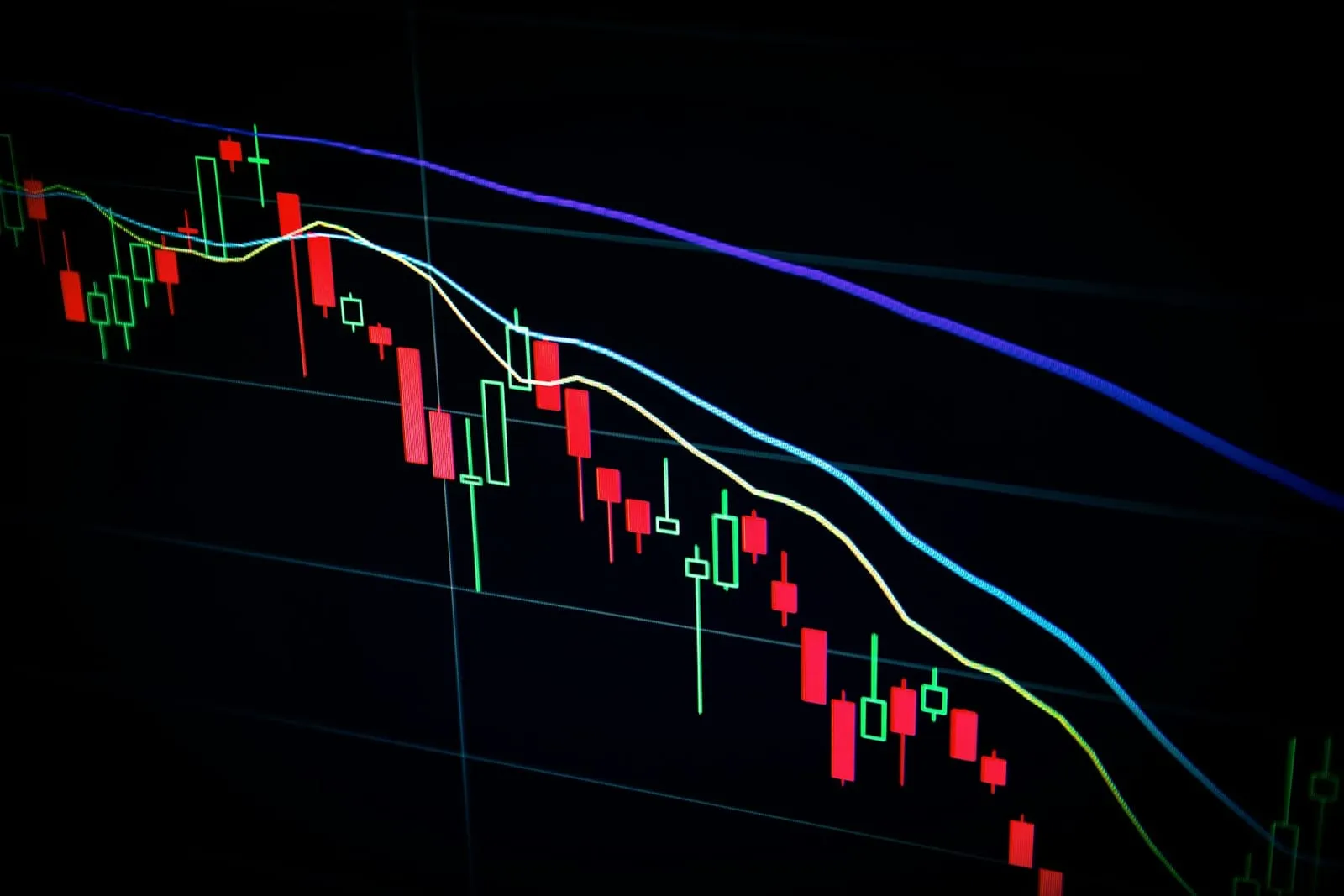
Bull vs bear market explained: the 20% rule, how a correction differs, how long each tends to last, the psychology behind them, and what to do and avoid.

Learn how to spot crypto scams, from pig butchering and fake platforms to rug pulls and seed-phrase phishing, plus a red flags checklist and how to report fraud.
Contact RedAndWhiteMagz.com
Spotted a market shift, a company worth profiling, a scam making the rounds or a mistake in one of our articles? Tell us. We read every message and reply as quickly as we can.