


Hybrid work culture: models, the productivity debate and what works
Hybrid work culture explained: the main models, what research says about productivity, how to run meetings and rituals fairly, and a checklist for managers.
Lifestyle & Culture · Trend report
The experience economy explained: Pine and Gilmore's idea, the progression of economic value, real examples from hotels to coffee shops and what it means for brands.
Key takeaways
The experience economy is the idea that businesses increasingly compete by staging memorable experiences rather than simply making goods or delivering services. The term comes from B. Joseph Pine II and James H. Gilmore, who argued in 1998 that experiences are a distinct kind of economic offering that customers will pay a premium for. Nearly three decades on, it explains a lot about why restaurants look like theaters, shops look like showrooms and a cup of coffee can cost several times what it used to.
In their July-August 1998 Harvard Business Review article, “Welcome to the Experience Economy,” Pine and Gilmore made a simple but provocative claim: just as economies had moved from agriculture to industry to services, a new stage was emerging in which the experience itself was what people bought. They expanded the argument in their 1999 book, The Experience Economy, whose subtitle captured the theme: work is theater, and every business a stage.
Their insight was that experiences had always existed, from fairs to theaters, but had usually been bundled with something else. A restaurant was thought of as a service; the atmosphere was a nice extra. Pine and Gilmore argued that companies should treat the experience as the main offering, design it deliberately and charge for it.
At the heart of the theory is a ladder that Pine and Gilmore called the progression of economic value. Each rung adds more differentiation and, typically, a higher price.
| Stage | Economic offering | What the seller does | Example |
|---|---|---|---|
| 1 | Commodities | Extracts raw materials | Coffee beans traded on markets |
| 2 | Goods | Makes tangible products | A bag of ground coffee in a supermarket |
| 3 | Services | Delivers intangible activities for a customer | A cup brewed at a diner |
| 4 | Experiences | Stages memorable events that engage the customer personally | An espresso in a stylish cafe with a view |
Their best-known illustration is the birthday cake. In an agrarian economy, a parent bakes from farm ingredients that cost very little. In an industrial economy, they buy a boxed cake mix. In a service economy, they order a cake from a bakery for considerably more. In the experience economy, they outsource the whole party, cake included, to a venue such as Chuck E. Cheese’s, paying far more again for the event and the memory.
Pine and Gilmore later added a further rung, transformations, where the customer is the product: a fitness program, a coaching relationship or a degree that changes who you are. Pine went on to write about this “transformation economy” in later work.
The coffee ladder makes the economics vivid. Say the beans in one cup cost a few cents as a commodity. Roasted, ground and packaged for home brewing, the same coffee might cost a few tens of cents per cup. Poured at a diner, it might be a dollar or two. Served in a design-led cafe or a historic square, the same drink can sell for several times that. The raw input barely changes; what customers pay for is convenience, then service, then the setting, the ritual and the story.
Pine and Gilmore also mapped experiences along two dimensions: whether guests participate passively or actively, and whether they absorb the experience (it comes to them) or are immersed in it (they go into it). That yields four realms:
The richest experiences, they argued, blend all four. A well-run cooking school, for instance, is educational (you learn technique), entertaining (the chef performs), esthetic (the kitchen is beautiful) and a little escapist (for two hours you are a chef, not an accountant). Pine and Gilmore also argued that once a company charges admission for the experience itself, rather than giving it away to sell something else, it has truly entered the experience business.
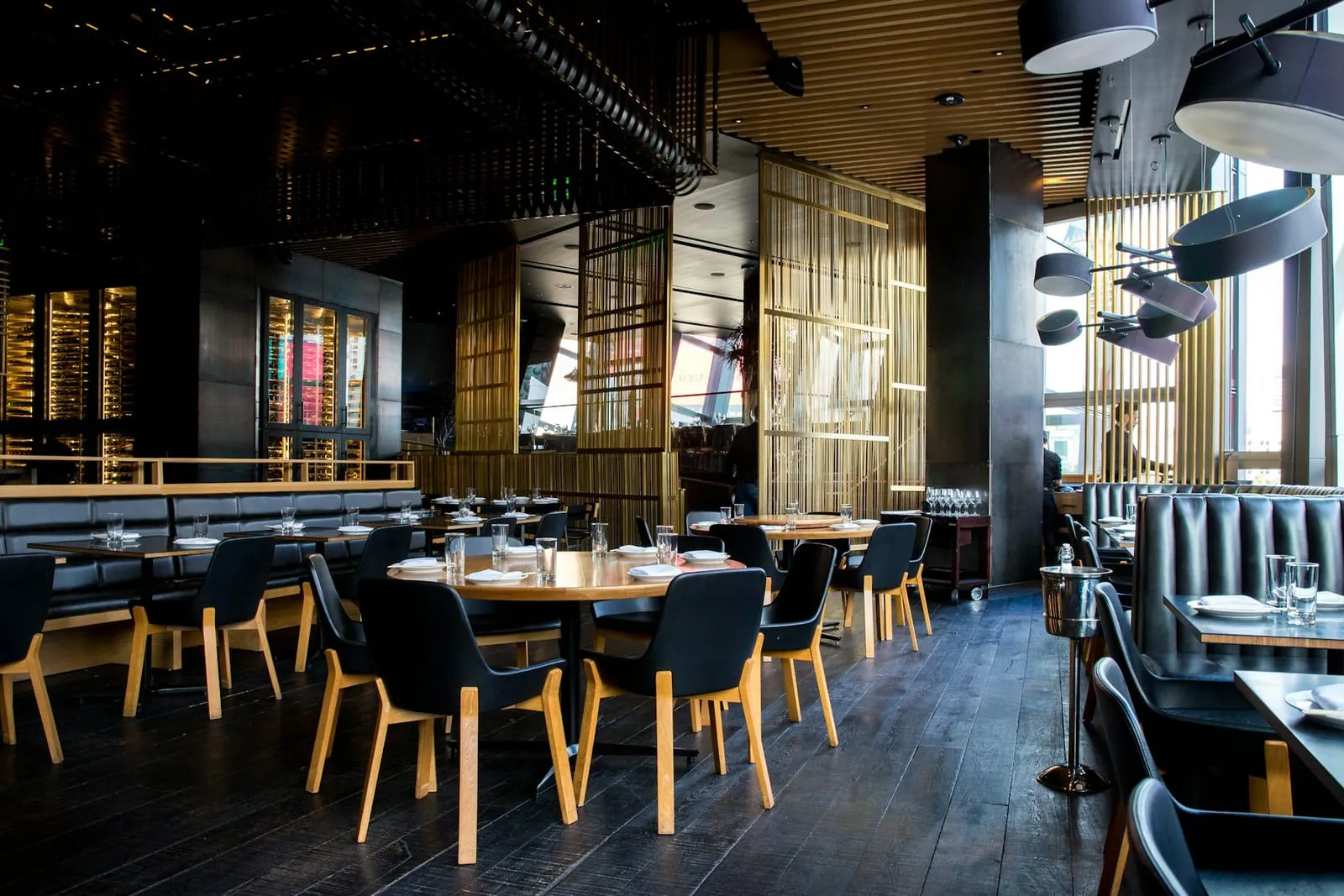
Hotels and restaurants are the most obvious arenas. A boutique hotel sells a mood as much as a bed: lighting, music, scent, design and staff who remember your name. Upscale restaurants increasingly feature open kitchens, tasting menus and chef’s counters that turn dinner into a performance, as in the warmly lit dining room pictured above.
As online shopping made buying products easier, physical stores leaned into experience: flagship stores with demonstrations, classes and events, product test areas and in-store cafes. The store becomes a place to try, learn and belong, with the actual transaction often completed later and elsewhere.
Concerts, festivals, sports and immersive exhibitions are pure experience offerings. Premium tiers, such as VIP access, meet-and-greets and hospitality packages, show how the same event can be layered to capture different willingness to pay.
Specialty coffee is the textbook case. Chains and independents alike sell a “third place” between home and work, a phrase associated with sociologist Ray Oldenburg, along with rituals such as single-origin pour-overs, latte art and named baristas. Customers pay for consistency, atmosphere and identity as much as caffeine.
The logic has spread well beyond leisure. Banks redesign branches as advice lounges, software companies obsess over user experience, and hospitals pay attention to the patient journey. All are applying the same idea: how people feel about an interaction shapes what they will pay and whether they come back.
In broad terms, consumer spending in advanced economies has shifted toward services over the long run. In the United States, data from the Bureau of Economic Analysis show that services account for roughly two-thirds of personal consumption expenditures, with categories such as recreation, food away from home, travel and accommodation forming a meaningful part. Services are not the same as experiences, but the trend points in the direction Pine and Gilmore described.
There is also a psychological case. In a widely cited 2003 study in the Journal of Personality and Social Psychology, Leaf Van Boven and Thomas Gilovich found that people generally reported more happiness from experiential purchases, such as trips and concerts, than from material ones. Experiences tend to be shared, become part of personal stories and are less exposed to direct comparison than possessions. Social media has amplified this, because experiences are inherently shareable.
Experience spending is not immune to the economic cycle. Discretionary outlays such as travel and dining out can be among the first things households cut when budgets tighten, so analysts watching market trends often track them as a signal of consumer confidence.
The experience economy offers richer choices but also more ways to overspend. Some practical habits help: decide in advance what experiences matter most to you, watch for upsells that add cost without much value, and remember that many meaningful experiences, such as a walk, a meal with friends or a free museum day, cost little or nothing.
The experience economy, first described by Pine and Gilmore in 1998, explains why so many businesses now sell memories rather than just products. Moving up the progression of economic value from commodities to goods, services and experiences lets companies differentiate and charge more, from boutique hotels to specialty coffee. For brands, the lesson is to design authentic, coherent experiences that justify their premium; for consumers, it is to spend on experiences deliberately. For more on how culture and commerce intersect, explore our Lifestyle & Culture hub.
It is the idea that many businesses now compete by creating memorable experiences rather than just selling products or services. A coffee shop, for example, sells atmosphere, ritual and a sense of place as well as a drink. Because customers value the memory, they are often willing to pay much more than the underlying ingredients or service would cost on their own.
B. Joseph Pine II and James H. Gilmore introduced the concept in their July-August 1998 Harvard Business Review article, 'Welcome to the Experience Economy,' and expanded it in their 1999 book, 'The Experience Economy.' They argued that experiences are a distinct economic offering, as different from services as services are from goods, and that companies should deliberately stage them.
Pine and Gilmore sorted experiences along two dimensions: how actively guests participate and whether they absorb the experience or are immersed in it. That produces four realms: entertainment (passive, absorbed, such as watching a show), educational (active, absorbed, such as a class), escapist (active, immersed, such as a theme park ride) and esthetic (passive, immersed, such as admiring a gallery or scenic view).
Not always, but there is evidence that experiences tend to bring longer-lasting satisfaction. A 2003 study by psychologists Leaf Van Boven and Thomas Gilovich found that people generally reported more happiness from experiential purchases than from material ones. Experiences become part of personal identity, are often shared with others and are less prone to unflattering comparisons.
First published . Spotted an error? Read our editorial policy and tell us.
Hybrid work culture explained: the main models, what research says about productivity, how to run meetings and rituals fairly, and a checklist for managers.
Practical business travel tips: planning, packing, loyalty programs, receipts and expenses, jet lag, health, device security and greener ways to fly.
How interest rates affect the stock market: the Fed's policy rate, discount rates and valuations, why bond prices fall as yields rise, and effects on sectors.
Contact RedAndWhiteMagz.com
Spotted a market shift, a company worth profiling, a scam making the rounds or a mistake in one of our articles? Tell us. We read every message and reply as quickly as we can.