
Gaming monitor buying guide: refresh rate, response time and resolution
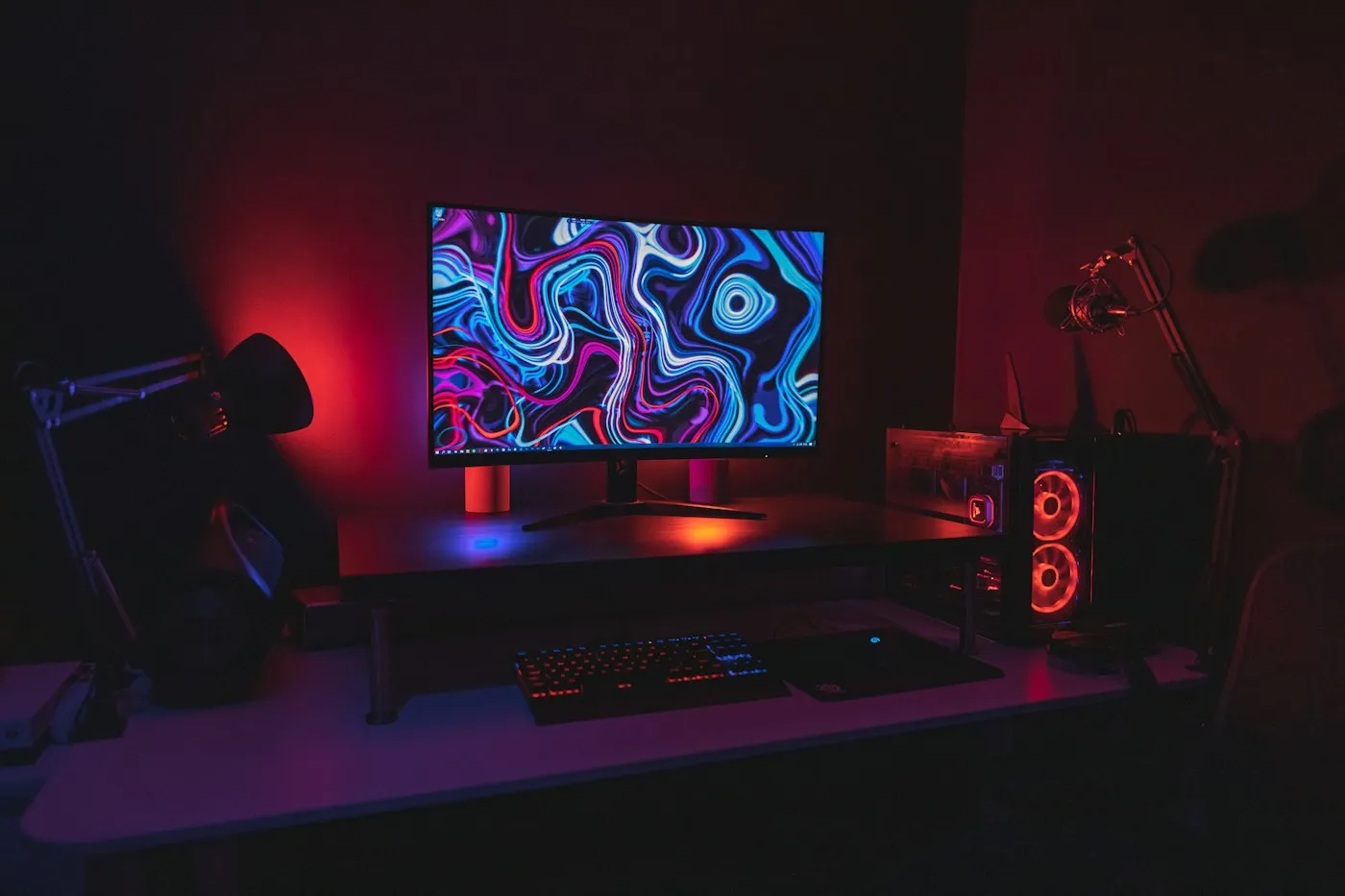
Our gaming monitor buying guide explains resolution, refresh rate, response time, panel types, HDR and ports so you can match a screen to your PC or console.
Gaming · Explainer
Game controllers explained: how Hall effect and TMR sticks resist drift, what polling rate means, and which pads work with PC, PS5, Xbox and Switch 2.
Key takeaways
A controller’s spec sheet can read like alphabet soup, but only a few terms really change how it feels and how long it lasts. Hall effect and TMR sticks resist the stick drift that wears out traditional sticks, polling rate tells you how often the controller reports your inputs, and compatibility depends on software and console licensing as much as on the plug. Here’s what each one means as of 2026, and when it’s worth paying for.
Stick drift is when your character or camera moves while you’re not touching the stick. It usually appears after months of use, and the cause is normally the sensor inside the stick.
Traditional sticks use two potentiometers, one for each axis (left-right and up-down). Inside each, a metal contact slides along a resistive track, and the controller reads the changing voltage as the stick’s position. Because the parts rub, they wear over time and dust can get in, until the reading at rest no longer matches true center and the game sees a push that isn’t there.
Potentiometer sticks are cheap, precise when new and still very common. If a controller’s box or listing doesn’t mention Hall effect or TMR, assume it uses them.
A Hall effect stick pairs a small magnet with a sensor that measures its magnetic field. Tilt the stick and the reading changes, but nothing touches, so the sensor itself doesn’t wear. The idea isn’t new: Texas Instruments notes that position-sensing uses like video game controllers have relied on Hall effect sensors for many years.
TMR, short for tunneling magnetoresistance, also reads a magnet without contact, but with a different kind of sensor. Allegro MicroSystems says its TMR technology offers higher magnetic sensitivity and lower power consumption than other magnetic technologies, including Hall effect. Lower power draw matters in a battery-powered controller.
TMR is showing up in more pads. The 8BitDo Ultimate 2 uses TMR sticks, and Valve says its 2026 Steam Controller has “magnetic thumbsticks using TMR technology.”
| Stick type | How it reads position | Sensor wear | Worth knowing |
|---|---|---|---|
| Potentiometer | Metal contact slides on a track | Yes, over time | Cheapest and most common |
| Hall effect | Sensor measures a moving magnet | None (no contact) | Widely available in third-party pads |
| TMR | Magnetoresistive sensor measures a magnet | None (no contact) | Higher sensitivity, lower power use |
Magnetic sensors don’t make a stick indestructible: springs, caps and the tilt mechanism can still wear, and any stick can need recalibrating. If yours drifts, recalibrate it first where your console or controller app allows. On Switch 2, Nintendo’s steps are System Settings > Controllers & Accessories > Calibrate Control Sticks. Sony also sells replacement stick modules for the DualSense Edge that you swap in yourself.
Polling rate, measured in hertz (Hz), is how many times per second a controller reports its buttons and sticks to your console or PC. A higher rate means a fresh input gets picked up sooner.
| Polling rate | Time between reports |
|---|---|
| 125Hz | 8 ms |
| 250Hz | 4 ms |
| 500Hz | 2 ms |
| 1000Hz | 1 ms |
Higher is better, but polling is one small link in a longer chain. At 60 frames per second, a new frame appears only every 16.7 ms, and the game, the TV and the connection all add delay of their own. Valve’s spec for the Steam Controller’s wireless Puck shows the balance: a 4 ms polling interval (250Hz) and about 8 ms end to end, measured at 5 meters. Our guide on how to reduce input lag covers the bigger wins.
Polling rate also depends on the connection. 8BitDo quotes 1000Hz for the Ultimate 2 over its 2.4 GHz dongle or a cable, but gives no Bluetooth figure. Console makers rarely advertise polling rates for their own pads, so treat unofficial figures with caution.
| Connection | Best for | Trade-offs |
|---|---|---|
| USB cable | Competitive play, full features on PC | A cable across the room |
| 2.4 GHz dongle or Xbox Wireless | Responsive wireless play on PC and console | Uses a USB port, and the dongle can go missing |
| Bluetooth | Phones, tablets, laptops and casual play | Can mean lower polling and fewer features |
Windows games read controllers through input standards, and a mismatch is a common reason a pad works in one game but not another.
Steam Input is Valve’s controller layer inside Steam. It lets you remap buttons, set up gyro aiming and use layouts other players have shared. On Windows, Valve says Steam Input can inject an emulated Xbox controller, so a game that only understands Xbox pads can still work with a PlayStation, Switch or generic controller.
The trade-off is that extra inputs get squeezed onto Xbox buttons; Valve’s example is the PlayStation touchpad click and Options button both mapping to Start. Valve’s own Steam Controller also needs Steam running, and some non-Steam games, including ones whose anti-cheat blocks emulated input, won’t work with it. Shopping for a portable PC instead? See our handheld gaming PC buying guide.
PCs accept almost any controller. Consoles are stricter, because each maker decides which controllers are allowed. If you’re still picking a platform, our gaming PC vs console guide covers the bigger picture.
Sony’s backward compatibility page says PS5 games “can only be played with DualSense wireless controllers,” while a DualShock 4 works with supported PS4 games. Sony has also licensed some third-party PS5 pads, such as the Victrix Pro BFG Reloaded, which its own store lists as PS5 compatible and built with Hall effect modules. Sony still warns that not every licensed or third-party controller works on PS5, so check with the maker before you buy.
Microsoft’s specs say the Xbox Wireless Controller connects to Xbox consoles with Xbox Wireless and uses Bluetooth for PCs, phones and tablets. For third-party pads, look for the Designed for Xbox logo, which Microsoft says marks accessories “developed alongside Xbox.” Skip unlicensed ones: Xbox Support explains that consoles can block unauthorized accessories.
According to Nintendo, original Joy-Con and the original Pro Controller pair wirelessly with Switch 2, but original Joy-Con can’t attach to the console. The newer Switch 2 Pro Controller works only with Switch 2, not the original Switch.
| Console | Works with | Watch out for |
|---|---|---|
| PS5 | DualSense and DualSense Edge; DualShock 4 in supported PS4 games | Third-party pads need PS5 licensing, so confirm with the maker |
| Xbox Series X and S | Xbox Wireless Controllers, which also work on Xbox One, and Designed for Xbox pads | Consoles can block unauthorized accessories |
| Switch 2 | Joy-Con 2, the Switch 2 Pro Controller, and original Joy-Con and Pro Controllers | Original Joy-Con pair wirelessly but can’t attach to the console |
Pro controllers add extras for fast games:
If drift has killed a controller before, make Hall effect or TMR sticks your first filter, and treat polling rate as a tiebreaker rather than a headline feature. Plug in or use a 2.4 GHz dongle for competitive play, and save Bluetooth for phones and couch sessions. Before buying a third-party pad for a console, check its licensing, since that decides whether it works at all; on PC, Steam Input fills most gaps. For more, see our gaming coverage or browse plain-English guides on RedAndWhiteMagz.com.
They're much less likely to, because the sensor never touches the magnet it reads. A magnetic stick can still sit slightly off-center if it needs recalibrating or if its spring or tilt mechanism is damaged. If your console or controller app has a calibration tool, try it before assuming the stick is broken.
It helps a little, mostly in fast competitive games. Going from 250Hz to 1000Hz shrinks the gap between reports from 4 ms to 1 ms, while a 60 fps game shows a new frame only every 16.7 ms. For casual play, a stable connection matters more than the headline number.
Not officially. Xbox consoles connect to controllers over Xbox Wireless or USB and can block unauthorized accessories, while PS5 games need a DualSense or a pad licensed for PS5. Unofficial adapters exist, but Sony and Microsoft don't support them, and an Xbox may block one as an unauthorized accessory.
Not necessarily. Steam Input is most useful for controllers a game doesn't recognize, or when you want custom layouts and gyro aiming. If a game already supports your controller and shows the wrong button prompts, try turning Steam Input off for that game.
First published . Spotted an error? Read our editorial policy and tell us.
Our gaming monitor buying guide explains resolution, refresh rate, response time, panel types, HDR and ports so you can match a screen to your PC or console.
Gaming PC vs console in 2026: how PS5, PS5 Pro, Xbox Series X|S, Switch 2 and a gaming PC compare on cost, games, graphics, subscriptions and upgrades.
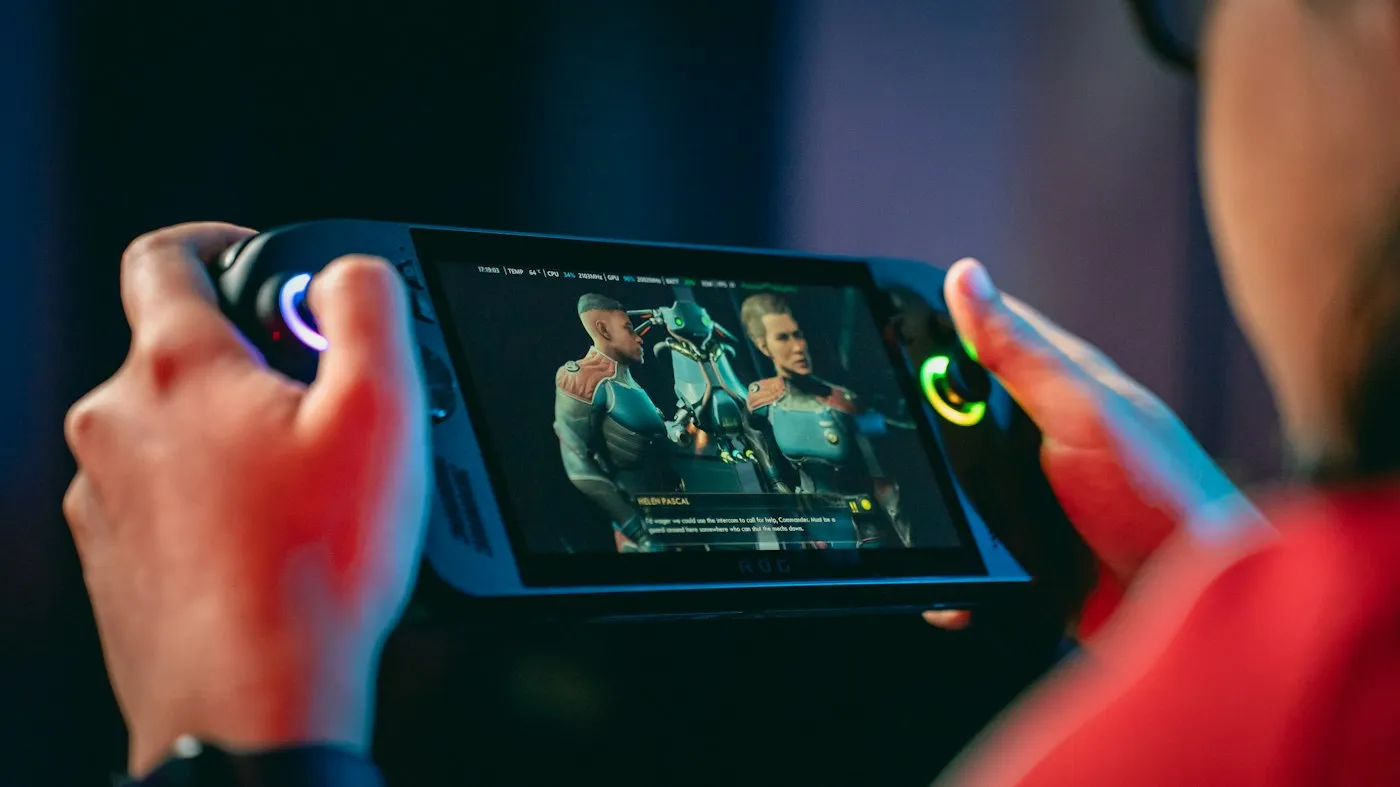
Our handheld gaming PC buying guide explains SteamOS vs Windows, chips, OLED screens, battery life, storage, docking and game compatibility before you buy.
Contact RedAndWhiteMagz.com
Spotted a new gadget, a scam making the rounds or a mistake in one of our guides? Tell us. We read every message and reply as quickly as we can.